Time per visit
Conventional primary care
15 minutes
Mt. Baker Medical
60-minute initial, 30+ ongoing
Fifteen years of emergency medicine plus A4M Fellow training. Root-cause work without leaving evidence-based care behind.
Locally, functional medicine is mostly the territory of naturopaths. Mt. Baker Medical is different — a board-certified MD who's also an A4M Fellow, doing root-cause investigation with the rigor of a fifteen-year ER physician (with nearly two decades in medicine overall) and the breadth of functional medicine training. The labs that conventional primary care doesn't have time for. The protocols built around what those labs actually show. The kind of relationship that makes longitudinal medicine possible at all.
Functional medicine is a way of practicing medicine that asks a different opening question than conventional primary care. Conventional primary care asks: what's the diagnosis, and what's the treatment for that diagnosis. Functional medicine asks: what's driving this — across all the systems that could be involved — and what would change the underlying picture, not just the symptom that brought the patient in.
In practice this means longer visits (you can't unwind a multi-system problem in fifteen minutes), broader labs (you can't see a pattern across systems if you only test one), and treatment plans built around what the labs actually show (you can't customize what you didn't measure). The Institute for Functional Medicine (IFM) formalized the methodology in the 1990s; the A4M Fellowship in Anti-Aging, Functional and Metabolic Medicine is the most rigorous credential pathway for physicians doing this work. Dr. Scribner holds the A4M Fellowship.
Functional medicine isn't alternative medicine. It uses the same labs, the same medications, and the same evidence base as conventional medicine — just deployed differently, and with the time to actually interpret the picture across systems. When pharmaceutical intervention is the right call, we use it. When it isn't, we don't reach for it to fill the visit.
Locally, most functional medicine is practiced by naturopathic doctors (NDs), who train in four-year programs that cover both conventional and natural medicine. NDs do excellent work, particularly on the lifestyle, nutrition, and botanical-medicine end of functional care. They're a real and valuable part of the local healthcare ecosystem.
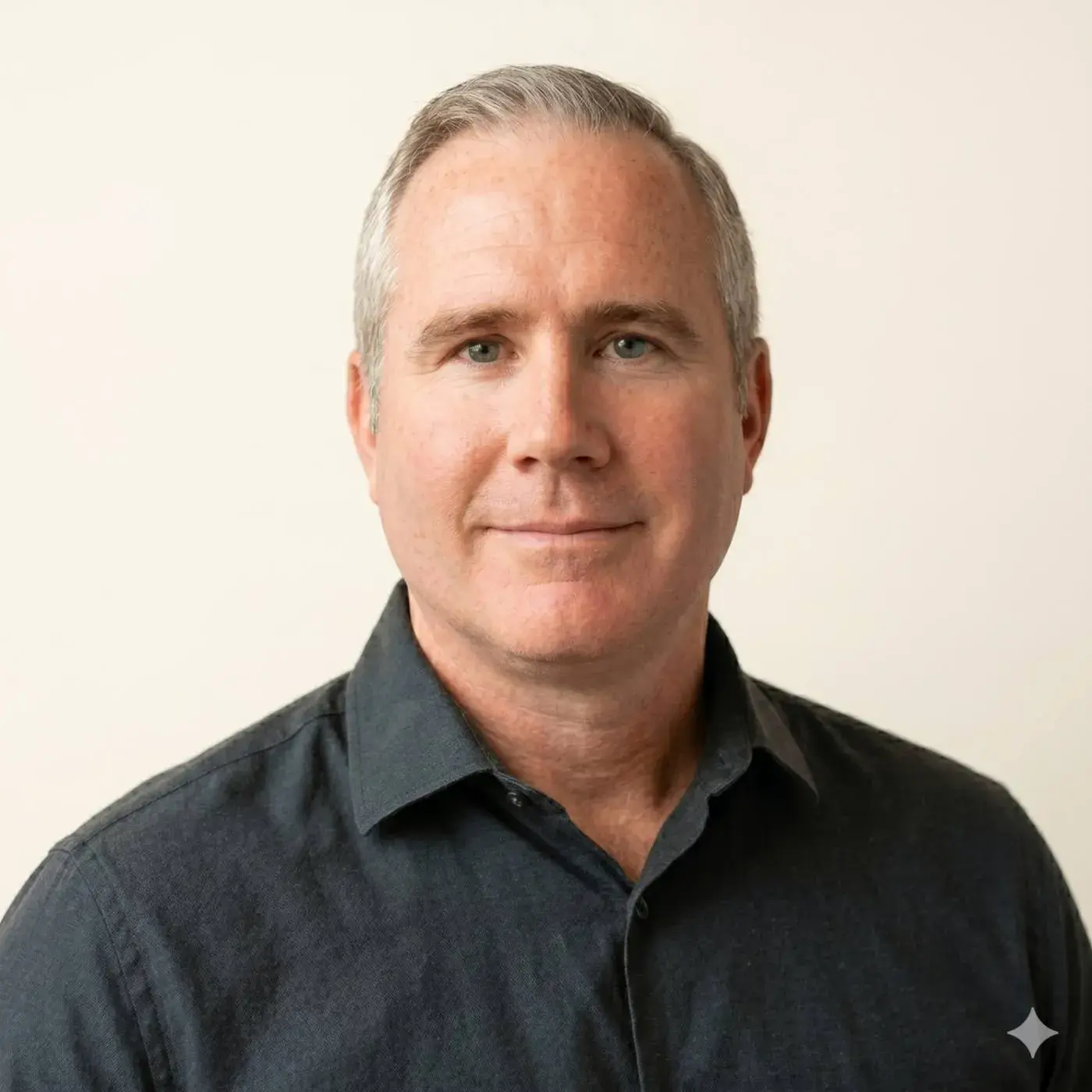
Mt. Baker Medical is MD-led. Dr. Scribner is a board-certified emergency physician (FACEP) with nearly two decades in medicine — fifteen of those in emergency medicine — plus the A4M Fellowship in functional and anti-aging medicine. That training combination brings several capabilities to the table.
The right choice between MD-led and ND-led functional medicine depends on what you're optimizing for. For patients with complex symptoms, multiple medications, prior workups that didn't find anything, or a history of conditions where prescription intervention may be needed — MD-led tends to fit. For patients optimizing primarily through lifestyle, nutrition, and botanical support — ND-led may fit better. We don't see this as competitive; we see it as different tools.
The annual physical that conventional primary care runs — CBC, basic metabolic panel, lipid panel, TSH — gives you a thin slice of a system that has many more variables. The functional medicine workup goes wider and deeper. Here's what we run at the initial visit.
Both approaches have their place. Conventional primary care is excellent for acute care, common conditions, and screening. Functional medicine is better suited for complex, chronic, multi-system problems that haven't responded to the conventional approach. Here's the honest comparison.
Conventional primary care benchmarks vs. Mt. Baker Medical's model.
15 minutes
60-minute initial, 30+ ongoing
What's the diagnosis?
What's driving this — across all systems?
CBC, metabolic panel, TSH, lipid panel
Full hormonal, thyroid, metabolic, inflammatory, micronutrient, methylation panels
Pharmaceutical intervention for diagnosed conditions
Pharmaceutical intervention when right; lifestyle, nutrition, supplements, hormones when right
Refer out
Same physician treats across systems
Rotating providers, panel of 2,000+ patients
Same physician, panel of ~300 patients
Insurance copay per visit + your premium
$300 / mo concierge membership, direct-pay
The honest answer: yes, when practiced with evidence-based rigor. The concerns are real and worth taking seriously. The two most common: (1) some functional medicine practitioners over-order tests that don't change what they do, which adds cost without clinical benefit; (2) some over-prescribe supplements and proprietary lines, which can be financially motivated rather than clinically motivated. Both happen. They're not inherent to functional medicine — they're failures of practice.
How MBM handles this: we test because the test will change what we do, not because the test is interesting. We prescribe supplements when labs document a deficiency or when there's evidence for a specific protocol, not because we sell a particular line (we don't). Treatment recommendations are grounded in published evidence; when the evidence is thin or contested, we say so. The A4M Fellowship requires rigorous coursework and re-certification; the methodology isn't fringe science.
Functional medicine is also not a complete replacement for conventional medicine. For acute infection, surgical conditions, cancer, fractures, and many other categories, conventional medicine is the right tool. We use it when it's the right tool. Functional medicine fills the gap where conventional primary care has too little time and too narrow a lab panel to investigate complex chronic symptoms properly. The two are complementary.
There are functional medicine doctors who accept insurance. Patients searching for them often find that 'accepts insurance' and 'practices functional medicine' don't quite line up in practice — because insurance reimbursement forces a 15-minute visit model, requires every test and treatment to be coded against a billable diagnosis, and excludes much of the panel functional medicine relies on. Functional medicine doctors who take insurance typically end up running a quasi-conventional practice with limited functional-medicine breadth.
Mt. Baker Medical is direct-pay because it's the only way to actually run the model. Sixty-minute visits, comprehensive panels, multi-system protocols, and a 300-patient panel are economically impossible under insurance reimbursement. The trade-off: you pay $300 a month for membership and a slightly higher rate for some labs and medications, but you get the model that actually delivers the care most people picture when they think 'functional medicine.' For many patients, the math works — concierge membership often replaces multiple disjointed care relationships and the copays and travel and time off that come with them.
Functional medicine is a way of practicing medicine that asks 'what's driving this across all the systems involved?' instead of 'what's the diagnosis and the treatment for it?' In practice that means longer visits, broader labs, and treatment plans built around what the labs actually show — across hormonal, metabolic, thyroid, inflammatory, micronutrient, and gut systems. It uses the same labs, medications, and evidence base as conventional medicine, just deployed differently and with the time to interpret across systems. The Institute for Functional Medicine (IFM) and the American Academy of Anti-Aging Medicine (A4M) maintain the rigorous certification pathways. Dr. Scribner holds the A4M Fellowship.
Naturopathic doctors (NDs) train in four-year programs that cover both conventional and natural medicine, with a strong emphasis on lifestyle, nutrition, and botanical interventions. They do excellent work and are an important part of the Bellingham healthcare ecosystem. Functional medicine — as practiced at MBM — is MD-led. Dr. Scribner is a board-certified emergency physician (FACEP) with nearly two decades in medicine, fifteen of those in emergency medicine, plus the A4M Fellowship. That training brings full prescribing authority (including compounding and controlled substances), acute-care pattern recognition, hospital privileges, and specialist relationships built over fifteen years at PeaceHealth St. Joseph. The right choice depends on what you're optimizing for. Both approaches have their place.
Yes, when practiced with evidence-based rigor. The concerns about functional medicine are real and worth taking seriously: some practitioners over-order tests that don't change clinical decisions, and some over-prescribe supplements for financial rather than clinical reasons. Both happen and both are failures of practice, not inherent to the discipline. MBM tests when the test will change what we do, prescribes supplements when labs document a deficiency, and grounds treatment recommendations in published evidence. The A4M Fellowship requires rigorous coursework and re-certification. Functional medicine isn't a replacement for conventional medicine — for acute infection, surgical conditions, cancer, and many other categories, conventional medicine is the right tool. Functional medicine fills the gap where conventional primary care has too little time and too narrow a lab panel to properly investigate complex chronic symptoms.
Three main differences. First, time: 60-minute initial visits versus 15-minute slots, because complex multi-system problems can't be unwound in 15 minutes. Second, lab breadth: full hormonal, thyroid, metabolic, inflammatory, micronutrient, and methylation panels versus a CBC plus a basic metabolic plus TSH plus lipid panel. Third, treatment philosophy: protocols built around what the labs actually show — across systems, often in combination — versus prescribing for the diagnosis that fits the chief complaint of the visit. Conventional primary care is excellent for acute care, common conditions, and routine screening. Functional medicine is better suited for complex, chronic, multi-system problems that haven't responded to the conventional approach. We use both where they fit.
Functional medicine at MBM is part of concierge primary care membership at $300/month (individual) or $570/month (couple). That covers unlimited 60-minute visits, the comprehensive lab workup, ongoing protocol adjustment, direct phone and message access to Dr. Scribner, and member pricing on every service in the menu (HRT, TRT, GLP-1, ketamine, NAD+, IV vitamin therapy, and others). Labs and medications are billed separately at member rates, typically lower than retail. Most members find this replaces multiple disjointed care relationships — primary care plus a hormone clinic plus a weight clinic plus a supplement store — at a roughly equivalent or lower total spend, with significantly better continuity of care.
Yes — and we recommend it. Insurance is required for everything outside of primary care: hospitalizations, specialists, imaging, expensive prescriptions, surgery. Many members keep a high-deductible plan to cover catastrophic events. This is usually the most cost-effective configuration. Switching insurance is an annual-enrollment decision — your benefits administrator or a broker can help optimize the pairing. Functional medicine at MBM does not replace insurance; it replaces (or supplements) the primary care relationship while leaving everything else in your existing insurance ecosystem.
Thirty minutes with Dr. Scribner — no exam, no commitment, no charge. We talk through your symptoms, your history, and the workup that would actually find what's going on.